

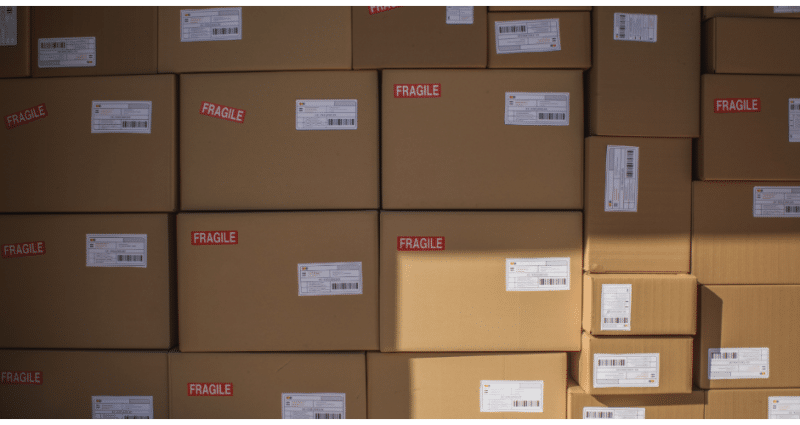
Growth creates opportunity, but it also creates operational pressure.
For many businesses, shipping workflows that worked perfectly at lower order volumes begin creating problems as fulfillment demand increases. What once felt manageable at 50 orders a week can quickly become inefficient, fragmented, and difficult to control at 500 or more.
Shipping bottlenecks rarely appear all at once. They typically build gradually as teams expand, order volume increases, and logistics operations become more complex.
The challenge is that many businesses continue relying on processes designed for smaller operations long after their shipping needs have evolved.
Here are some of the most common shipping bottlenecks growing businesses face and how modern logistics infrastructure can help solve them.
Manual Shipping Workflows Start Consuming Valuable Time
One of the first bottlenecks businesses encounter is operational inefficiency caused by manual shipping tasks.
Creating labels individually, entering shipment details manually, switching between courier portals, and managing spreadsheets may work temporarily, but these workflows become increasingly difficult to maintain as order volume grows.
Manual processes often lead to:
- Slower fulfillment times
- Increased risk of shipping errors
- Delays during high-volume periods
- Operational strain on internal teams
As businesses scale, fulfillment teams need systems that reduce repetitive work and improve shipping throughput.
Batch shipping tools, CSV uploads, and eCommerce integrations help automate shipment creation and reduce operational friction across fulfillment workflows.
Lack of Rate Visibility Creates Cost Control Challenges
Many growing businesses also struggle with shipping cost visibility.
Without access to multiple courier options in one place, teams may continue using the same service levels or carriers without understanding whether more efficient or cost-effective alternatives exist.
This becomes even more important during periods of rising shipping costs, peak season surcharges, or cross-border expansion.
Multi-courier shipping platforms help businesses:
- Compare rates across multiple couriers
- Improve routing flexibility
- Gain better visibility into shipping spend
- Make faster operational decisions
Better visibility supports better cost control and reduces the operational guesswork involved in carrier selection.
Tracking and Delivery Visibility Become Harder to Manage
As shipment volume increases, customer support teams often begin experiencing a rise in delivery-related inquiries.
Questions like:
- “Where is my order?”
- “Was the package delivered?”
- “Who signed for it?”
can quickly overwhelm support teams when shipment visibility is fragmented across multiple courier systems.
Modern logistics platforms help centralize shipment tracking and delivery information into one system.
Features like proof of delivery visibility, delivery photos, recipient signatures, and centralized tracking records help businesses improve post-purchase visibility while reducing time spent handling follow-up requests.
Customizable Branded Tracking pages can also help businesses maintain a more consistent customer experience after checkout.
Freight and Parcel Operations Become Disconnected
As businesses expand into palletized freight, wholesale distribution, or larger inventory movements, another operational bottleneck often appears.
Parcel shipping and freight shipping frequently end up managed in completely separate systems, creating fragmented logistics operations.
This can create challenges around:
- Shipment visibility
- Operational coordination
- Carrier management
- Reporting consistency
- Internal communication
Businesses increasingly need logistics infrastructure that supports parcel, LTL, and FTL shipping within one unified environment.
Centralized logistics management improves operational visibility and helps businesses maintain better control as shipping complexity increases.
Scaling Without Better Infrastructure Creates Operational Pressure
One of the biggest misconceptions in logistics is that operational problems can simply be solved by adding more manual effort.
In reality, scaling fulfillment operations without improving infrastructure often creates:
- Higher operational costs
- Slower processing times
- Increased shipping errors
- Reduced visibility
- More pressure on internal teams
As businesses grow, logistics operations require stronger systems, automation, and visibility to support higher shipment volume efficiently.
The solution is not simply shipping more. It is building shipping operations designed to scale.
Building Logistics Infrastructure for Long-Term Growth
Modern shipping operations require more than just discounted rates.
Growing businesses increasingly need:
- Multi-courier flexibility
- Centralized shipment visibility
- Freight and Parcel connectivity
- Tracking and proof of delivery visibility
- Operational analytics
- Automation tools
- eCommerce integration support
ShipTime helps businesses centralize shipping operations within one unified logistics platform designed to support scale, speed, and operational control.
By bringing together multiple couriers, freight options, automation tools, tracking visibility, and logistics infrastructure into one system, businesses can reduce operational bottlenecks while improving long-term shipping performance.
Growth creates logistics complexity quickly. The businesses that scale successfully are often the ones that invest early in operational visibility, flexibility, and infrastructure.
ShipTime is a full-service logistics platform built for product-oriented small and mid-sized businesses that want to simplify shipping, control costs, and improve operational efficiency.
Through one intuitive system, businesses access a broad range of carriers at attractively discounted rates, managing everything from envelopes and parcels to LTL freight in one place.
ShipTime integrates easily with most business systems to streamline workflows while providing clear analytics to help monitor performance and manage costs — all without monthly platform fees or the need to manage multiple carrier accounts.
While many platforms compete primarily on discounted rates, ShipTime is built around real logistics expertise, practical technology, and hands-on support — key drivers that help businesses grow. We act as an extension of your team, helping you make informed decisions, resolve issues quickly, and run your shipping operation with greater control and confidence.