


Growth is often seen as a positive signal in any business. More orders, more customers, and more movement. But in shipping operations, growth also introduces complexity. What once worked at low volume quickly becomes inefficient, difficult to manage, and harder to control.

For many small and mid-sized businesses, this shift happens gradually. A few extra tools are added. Processes become more manual. Decisions are made quickly to keep up. Over time, these changes create operational strain that impacts cost, performance, and visibility.


Why Operational Complexity Increases with Scale

As shipping volume grows, operations become more layered. What used to be handled in a single system or workflow often expands across multiple tools and processes.


Fragmented Tools Create Gaps in Visibility

Many businesses rely on separate systems for rate comparison, label creation, tracking, and reporting. While each tool may serve a purpose, they rarely connect in a meaningful way.

This leads to:

– Limited visibility across shipments

– Difficulty tracking performance across couriers

– Delayed or incomplete reporting


Without a unified view, it becomes harder to understand where costs are increasing or where performance is slipping.


Manual Workflows Don’t Scale

Manual processes often begin as a quick solution. Copying shipment details, switching between platforms, or handling exceptions manually may seem manageable early on.

As volume increases, these workflows create:

– Processing delays

– Higher risk of human error

– Increased labour time per shipment


The result is a system that slows down as demand increases, rather than adapting to it.


Lack of Control Over Courier Decisions

Without a structured approach to courier selection, businesses may default to familiar options instead of optimal ones.

This can lead to:

– Inconsistent service levels

– Higher shipping costs

– Missed opportunities to optimize delivery performance


As shipment volume grows, these inefficiencies compound.


Where Complexity Starts to Impact the Business

Operational complexity does not stay contained within shipping. It begins to affect broader areas of the business.


Customer Experience Becomes Inconsistent

Delays, limited tracking visibility, and inconsistent delivery performance impact customer expectations. This often results in increased support inquiries and reduced satisfaction.


Teams Spend More Time Managing Logistics

Instead of focusing on growth, teams spend more time managing issues, correcting errors, and coordinating across systems.

team working together

Cost Becomes Less Predictable

Without clear visibility and structured processes, shipping costs fluctuate. Surcharges, service mismatches, and inefficient routing become harder to identify.


Get A Quote


Moving from Workarounds to Structured Operations

Addressing operational complexity requires more than incremental fixes. It requires a shift in how shipping is managed.


Consolidating Tools into One Platform

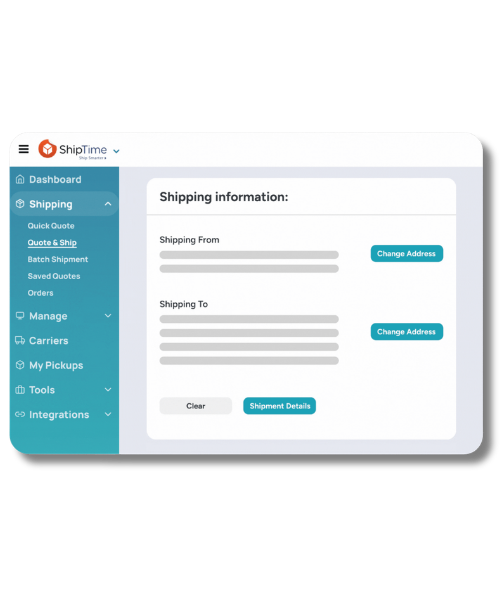
A unified logistics platform brings rate comparison, shipment creation, tracking, and reporting into a single environment.

This enables:

– Centralized visibility across all shipments

– Faster decision-making

– Consistent workflows


Automating Repetitive Processes

Automation reduces reliance on manual input and ensures consistency across shipments.

Examples include:

– Automated rate selection based on cost or speed

– Batch shipment processing

– Integrated tracking updates


This allows operations to scale without increasing manual workload.


Building Control into Courier Selection

With access to multiple couriers in one place, businesses can make informed decisions for each shipment.

This improves:

– Cost control

– Service reliability

– Delivery performance across regions


shiptime platform

How ShipTime Supports Scalable Shipping Operations

ShipTime provides a unified logistics platform designed to help businesses manage shipping as complexity increases.

Through one platform, businesses can:

– Compare rates across multiple couriers in real time

– Manage shipments, tracking, and reporting in a centralized system

– Automate key workflows to reduce manual effort

– Maintain visibility and control as shipping volume grows


By combining courier access, automation, and operational visibility, ShipTime helps businesses move from reactive workflows to structured logistics operations.

Get A Quote


Operational complexity is a natural part of growth, but it does not need to limit performance. Businesses that rely on fragmented tools and manual processes often experience rising costs, reduced visibility, and increasing operational strain.

By consolidating systems, introducing automation, and building structured processes, shipping operations can scale with greater control and efficiency.


ShipTime Logo

About ShipTime:

ShipTime is a full-service logistics platform built for product-oriented small and mid-sized businesses that want to simplify shipping, control costs, and improve operational efficiency.

Through one intuitive system, businesses access a broad range of carriers at attractively discounted rates, managing everything from envelopes and parcels to LTL freight in one place.

ShipTime integrates easily with most business systems to streamline workflows while providing clear analytics to help monitor performance and manage costs — all without monthly platform fees or the need to manage multiple carrier accounts.

While many platforms compete primarily on discounted rates, ShipTime is built around real logistics expertise, practical technology, and hands-on support — key drivers that help businesses grow. We act as an extension of your team, helping you make informed decisions, resolve issues quickly, and run your shipping operation with greater control and confidence.