

Shipping costs rarely increase all at once. Instead, they build quietly across daily decisions, small inefficiencies, and limited visibility into what is actually being spent.
For many growing businesses, this results in 15–30% of total shipping spend being lost without clear explanation. The issue is not just rates – it is the lack of control, insight, and consistency across shipping operations.
Understanding where this loss happens is the first step toward correcting it.
Where Shipping Spend Is Lost
Lack of Rate Comparison
Many businesses default to a single courier or account without evaluating alternatives for each shipment. This often leads to overpaying for faster services than required, inefficient routing, and services that do not match shipment size or destination. Without consistent rate comparison, pricing decisions are made without context.
Limited Visibility Across Shipments
Shipping data is often fragmented across systems, invoices, and courier portals. This makes it difficult to answer basic operational questions: what is the average cost per shipment, which courier is most cost-effective by region, and where are accessorial charges increasing spend. Without centralized visibility, cost patterns remain hidden.
Inconsistent Shipping Decisions
As shipping volume grows, different team members may make different decisions based on habit rather than data. This creates variability in courier selection, service levels, and packaging choices. Over time, inconsistency leads to higher overall logistics costs.
Hidden Fees and Accessorial Charges
Fuel surcharges, residential delivery fees, and additional handling charges can significantly increase costs. Without clear breakdowns, these charges are often only noticed after invoices are reviewed, if at all.
How Visibility and Rate Comparison Fix It
Centralized Rate Comparison Across Couriers
A multi-courier approach allows businesses to compare rates in real time for every shipment. Instead of relying on a single option, teams can select the most appropriate service based on cost, delivery timeline, and destination requirements. This introduces consistency and ensures decisions are based on current data, not assumptions.
Real-Time Cost Visibility
Access to shipping data at the time of label creation changes how decisions are made. With full visibility into total shipment cost, service breakdown, and delivery timelines, businesses can make informed choices before costs are incurred, not after.
Data-Driven Decision Making
When shipping activity is centralized, patterns become easier to identify. This enables businesses to track cost trends over time, identify high-cost lanes or regions, and adjust courier strategies based on performance. Over time, this reduces variability and improves predictability in shipping spend.
Standardization Across Teams
A unified logistics platform ensures that shipping decisions follow consistent logic across the organization. This reduces dependency on individual knowledge and improves operational control as volume scales.
How ShipTime Supports Cost Control and Visibility
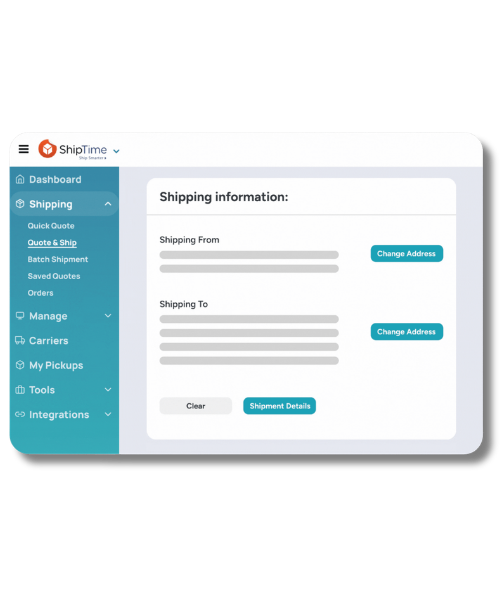
ShipTime provides businesses with a comprehensive logistics platform designed to bring structure and insight to shipping operations. Through a unified interface, businesses can compare rates across leading couriers in real time, access detailed shipment cost breakdowns before creating labels, centralize shipping activity and reporting in one place, and maintain consistency across teams and workflows.
By combining rate comparison with operational visibility, ShipTime helps businesses reduce unnecessary spend while maintaining control as shipping volume increases.
Shipping cost issues are rarely caused by one decision. They are the result of limited visibility, inconsistent processes, and a lack of real-time comparison.
Recovering the 15–30% of lost spend requires a shift from reactive cost management to proactive control.
With the right level of visibility and access to multiple courier options, businesses can make better decisions on every shipment and build a more predictable, efficient logistics operation over time.
ShipTime is a full-service logistics platform built for product-oriented small and mid-sized businesses that want to simplify shipping, control costs, and improve operational efficiency.
Through one intuitive system, businesses access a broad range of carriers at attractively discounted rates, managing everything from envelopes and parcels to LTL freight in one place.
ShipTime integrates easily with most business systems to streamline workflows while providing clear analytics to help monitor performance and manage costs — all without monthly platform fees or the need to manage multiple carrier accounts.
While many platforms compete primarily on discounted rates, ShipTime is built around real logistics expertise, practical technology, and hands-on support — key drivers that help businesses grow. We act as an extension of your team, helping you make informed decisions, resolve issues quickly, and run your shipping operation with greater control and confidence.